

Six decades on, the Asean that Malaysia is inheriting as chair this year is a vastly different entity. Indeed, Asean has proved to be one of the fastest-growing regions over the last half-century, with the bloc now the fifth-largest economy in the world. But it is not just economic size that makes Asean matter. It is one of the most deeply embedded regions in global value chains, producing the world’s most technologically advanced and strategically important goods, including semiconductors, electronics and automotives.
However, even as Asean continues to pride itself on its embrace of free and open trade, the crosswinds of global affairs have grown increasingly turbulent. As the spectre of protectionism threatens to rear its ugly head around the world, the need for strong, decisive and forward-thinking regional leadership is paramount — and this is precisely where Asean, with Malaysia in the driver’s seat, steps in.
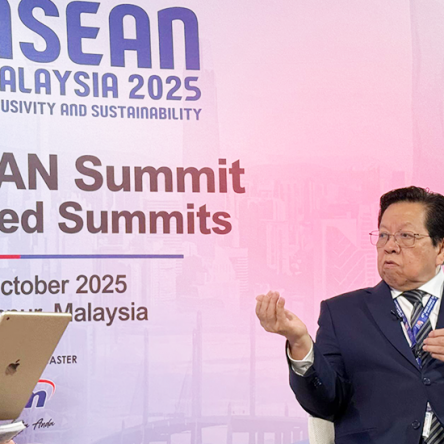
On Jan 1, the country officially assumed the annual chairmanship of Asean under the theme of “inclusivity and sustainability”. Cognisant of the urgency to strengthen Asean’s resilience to international headwinds, Malaysia has proposed 18 priority economic deliverables under four strategic thrusts — (i) enhancing trade and investment, (ii) creating an inclusive and sustainable future, (iii) promoting integration and connectivity of economies, and (iv) building a digitally resilient Asean.
Focus on FTAs
Accordingly, Malaysia should focus on three broad initiatives to fulfil its deliverables as the incumbent Asean chair. First, the country should lead efforts to reinvigorate Asean’s trade architecture. A good place to start would be upgrading and improving the implementation of existing free trade agreements (FTAs).
This year, Malaysia must oversee the finalisation of upgrades to the 14-year-old Asean Trade in Goods Agreement (ATIGA) as well as the applicable Asean+1 FTAs, such as Asean-India Trade in Goods Agreement and Asean-China Free Trade Area. These renewed agreements should be holistic in nature, incorporating provisions common in modern FTAs, such as digital trade, intellectual property regulations and sustainability, as well as pursuing alignment with key regional frameworks, including Asean’s Digital Economy Framework Agreement and Circular Economy Framework.
Similarly, strengthening the implementation and utilisation of the Regional Comprehensive Economic Partnership (RCEP), the landmark multilateral FTA formulated on the back of the Asean Economic Community Blueprint 2025 during Malaysia’s previous chairmanship, is critical. As a manifestation of Asean centrality, it is imperative that RCEP’s potential be unlocked further by fast-tracking the operationalisation of the joint committee and subsidiary bodies to address trade issues and promote its greater utilisation. To resolve implementation challenges, Malaysia, as the chair, should lead Asean member states in placing more emphasis on intergovernmental dialogue as well as promoting capacity-building among small and medium enterprises throughout the region.
These efforts will strengthen existing institutional structures and create new pathways for integration. The result will be greater trade within Asean and its neighbours, building resilience and reversing stagnation in intra-Asean trade, which has hovered around 23% to 25% of total Asean trade in the last two decades. Coupled with Malaysia’s revolutionary proposals, such as the Asean-Gulf Cooperation Council-China Summit, Asean could reinforce its position as a bastion of opportunity and prosperity in a world otherwise marked by uncertainty.
Harmonisation goals
Second, Malaysia can prioritise breaking through legacy barriers to deeper trade integration. While Asean has made strides through RCEP and the Asean+1 FTAs, long-standing non-tariff measures (NTM) and slow progress on the free movement of skilled labour are two hurdles hindering deeper integration.
Despite achieving duty-free trade in more than 96% of goods, the number of NTMs in Asean, including domestic quotas, export restrictions and phytosanitary measures, has risen by more than 50% since 2018. Likewise, a lack of harmonisation in labour standards and mutual recognition in skills certification hampers the flow of talent across Asean’s borders. These are not new challenges but are becoming an increasingly unwelcome barrier as global value chains become more complex amid geopolitical tensions.
To address this, Malaysia should push for dialogue with its Asean partners to tackle NTMs head-on and set more ambitious goals towards reducing non-tariff barriers to trade. Building transparency and compliance in NTM reduction through mutual recognition agreements is essential to fulfilling the AEC Blueprint 2025 as well as setting the stage for the Asean Community Vision 2045.
As chair, Malaysia can also work to accelerate existing Asean frameworks on the movement of natural persons, visa exemption and standardising educational qualifications — including revitalising efforts via the Asean Qualifications Reference Framework. On this front, working towards greater mutual recognition of skills agreements, increasing cross-border initiatives for skills development, including reciprocal work/training visas, and establishing regional Asean skills centres, would go a long way.
Shared prosperity
Finally, a mindset shift is needed across Asean governments. Malaysia should explore ways to promote economic cooperation among Asean, especially as competitive forces rise and states clamour to benefit from supply chain diversion and foreign direct investment. This “zero-sum” mentality threatens to undermine regional cohesion and cooperation.
Malaysia as Asean chair can reinvigorate efforts to create more regional areas of shared growth that aim to take advantage of Asean member states’ varied strengths and promote more inclusive cross-border development. Recent examples include the Johor-Singapore Special Economic Zone, which could serve as a sandbox for promoting a more seamless movement of labour and capital that could be replicated across different member countries.
Ultimately, Malaysia’s year as Asean chair comes at a time when economic priorities and strategic imperatives overlap. The narrative for deeper economic integration is no longer just about achieving prosperity, as it was in the 2000s. Today, it is a necessary condition for Asean’s continued relevance and survival.
It is, therefore, no coincidence that Malaysia’s priority economic deliverables reflect a renewed commitment to regional integration that prioritises openness over isolation, collaboration over competition and unity over division. If Malaysia’s proposals come to fruition, Asean should be well positioned to navigate future challenges and secure long-term prosperity in an ever-changing world.